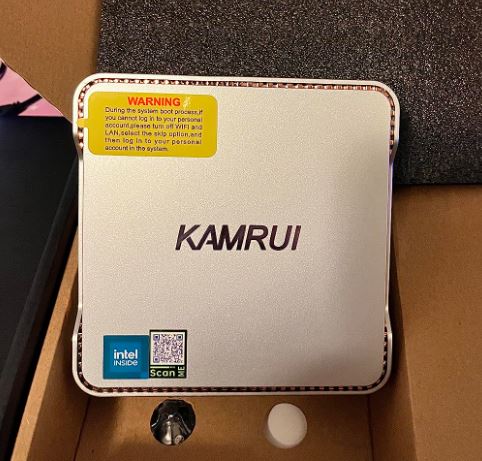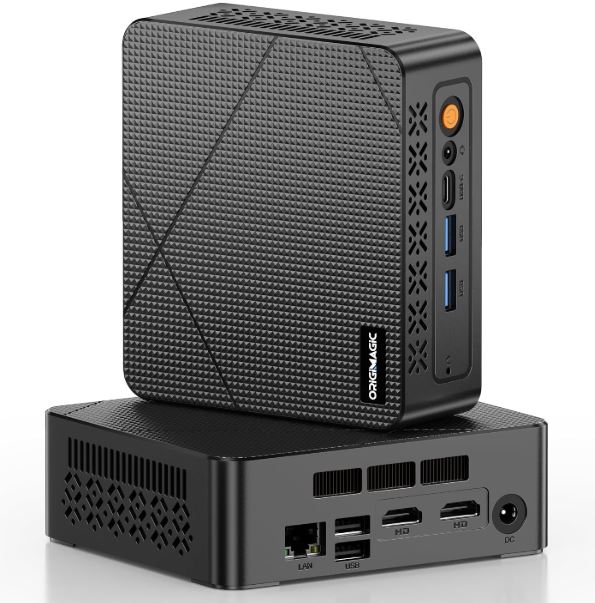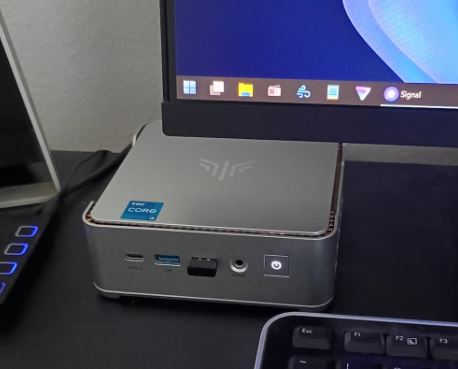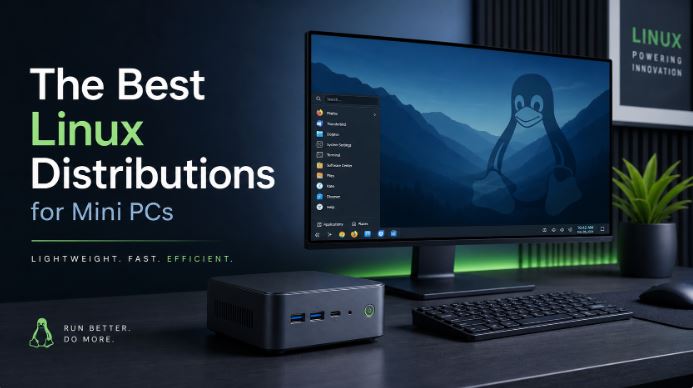
Low-power mini PCs have become one of the best alternatives for building a quiet desktop, a media center, a small home server, or an efficient office setup. In 2026, Linux remains the most attractive option for this type of hardware because it allows for better RAM utilization, reduces background processes, and extends the lifespan of the equipment.
If you have a Mini PC with an Intel N100, N95, Celeron, Pentium Silver, AMD Athlon Silver, Ryzen Embedded, or even older hardware, choosing the right Linux distribution makes a big difference. Not all Linux distributions consume the same resources, nor do they offer the same ease of installation, Wi-Fi compatibility, codec support, recovery tools, or desktop experience.
In this updated 2026 guide, you'll find the best Linux distributions for low-power Mini PCs, the advantages of each, their minimum requirements, and which one to choose based on your use case.
Why use Linux on a Mini PC?
Linux is a particularly good fit for a Mini PC because it can run with less RAM and storage than other systems, especially if you choose lightweight desktops like LXQt, Xfce, Fluxbox, or Trinity. On compact machines, this translates to less system load, better overall responsiveness, and less lag when opening applications or browsing the web.
Furthermore, many lightweight distributions still offer 32-bit and 64-bit support, live boot mode, USB installation, and tools for rescuing or repurposing modest systems. antiX, for example, stands out for its focus on older systems and for maintaining both 32-bit and 64-bit versions.
Another important point is efficiency. A low-power Mini PC is often used for many hours a day, and a lightweight system helps reduce unnecessary tasks, aggressive ventilation, and resource usage without sacrificing web browsing, office applications, multimedia, development, or even light virtualization.
What should a good Mini PC distro have in 2026?
Before choosing a Linux distribution for a Mini PC, it is advisable to consider several factors:
-
Idle RAM usage.
-
Start-up speed.
-
WiFi, Bluetooth and integrated graphics compatibility.
-
Ease of installation.
-
Long-term support.
-
Extensive repositories and stable updates.
-
Good performance with small SSDs, for example 64 GB or 128 GB.
In 2026, for a modern entry-level Mini PC, a "lightweight" Linux distribution doesn't always have to be extreme. In many cases, a balanced option like Lubuntu, Linux Mint Xfce, or MX Linux offers a better everyday experience than an ultra-minimalist distribution, especially if you want to use the machine as your primary desktop.
The best Linux distributions for low-power Mini PCs in 2026
1. Lubuntu
Lubuntu remains one of the best options for modest Mini PCs thanks to its LXQt desktop environment, which prioritizes lightweight performance without sacrificing usability. Lubuntu's community documentation indicates that it can be installed on very modest hardware and that the desktop installer requires between 384 and 800 MB of RAM, although more memory is recommended for a truly smooth experience.
Its biggest advantage is its balance. It's quite lightweight, based on Ubuntu, offers access to a huge software ecosystem, and has a very gentle learning curve for users coming from Windows. For a Mini PC with 4GB or 8GB of RAM, Lubuntu remains a very solid choice in 2026.
Ideal for:
-
Office.
-
Web browsing.
-
Study.
-
Home Mini PC.
-
Beginner users.

2. antiX
antiX is one of the best-known Linux distributions for low-resource computers. Its official website states that it can run on very old machines, with a minimum of 512 MB of RAM recommended, and that installation on the hard drive requires at least 7 GB.
The key to antiX lies in its true lightweight nature. It uses window managers like IceWM, Fluxbox, or JWM instead of heavier environments, and offers Full, Base, Core, and Net images, allowing you to tailor the installation to the type of Mini PC and its intended use.
For an older Mini PC, a repurposed nettop, or a secondary machine geared towards simple tasks, antiX is one of the most efficient options you can install in 2026. However, it is visually less modern and may require a bit more experience than Lubuntu or Mint.
Ideal for:
-
Vintage Mini PCs.
-
Devices with 2 GB of RAM or less.
-
Rescue and maintenance.
-
Intermediate users.

3. Linux Mint Xfce
Linux Mint Xfce isn't the most minimalist distribution on this list, but it's one of the most highly recommended for those seeking ease of use, stability, and a polished experience. In its official FAQ, Linux Mint lists the requirements as 2 GB of RAM, 20 GB of disk space, and a 1024x768 resolution, with 4 GB recommended for a comfortable experience.
On a modern, low-power Mini PC, for example with an Intel N100 and 8 GB of RAM, Linux Mint Xfce offers an excellent combination of performance, hardware support, and ease of use. It is especially recommended for users who want a "set it and go" experience without struggling with complicated configurations.
Furthermore, Xfce remains one of the most well-rounded desktop environments in the Linux ecosystem. It consumes fewer resources than GNOME or KDE in many scenarios and maintains a classic, fast, and easily customizable interface.
Ideal for:
-
Users migrating from Windows.
-
Mini PC for everyday work.
-
Multi-tabbed navigation.
-
Office automation and multimedia.

4. MX Linux
MX Linux continues to stand out in 2026 as a very stable and quite efficient distribution, especially in its Xfce and Fluxbox editions. The Xfce documentation lists 2 GB of RAM and 10 GB of free space as the minimum requirements for MX Linux, while other references to MX 23 indicate that it can boot with even lower specifications in minimal configurations.
The reason it's so popular on modest hardware is that it combines a Debian Stable base with very useful proprietary tools for configuring the system, creating live USBs, and managing packages. It's not as extreme as antiX, but for many, Mini PC offers a better desktop experience.
If you're looking for a lightweight yet complete distro with a good balance of speed, stability, and graphical tools, MX Linux remains one of the best candidates for 2026.
Ideal for:
-
Intermediate users.
-
Mini PC for office.
-
Reused equipment.
-
For those who want Debian stability without complications.

5. Q4OS
Q4OS is a less well-known distribution than Ubuntu or Mint, but it's very interesting for low-power Mini PCs. Its download page indicates very low minimum requirements: with the Trinity desktop environment, it can run with as little as 350 MHz, 256 MB of RAM, and 3 GB of disk space, while Plasma requires more resources.
The best option for a modest Mini PC is to use Q4OS with Trinity Desktop, as this is where its lightweight nature truly shines. Furthermore, it maintains a classic and quite user-friendly interface for those who prefer a traditional desktop.
For older, compact computers or those with very limited memory, Q4OS is one of the most practical options on this list. It's not as popular as Lubuntu or Mint, but its minimal requirements make it particularly appealing.
Ideal for:
-
Very limited hardware.
-
Recycled Mini PCs.
-
Users looking for a classic desktop.
-
Computers with little RAM and little disk space.

6. Puppy Linux
Puppy Linux continues to appear on many lists of lightweight Linux distributions for a clear reason: it's designed to be very small, boot quickly, and run well on modest hardware. Several lightweight distribution compilations continue to highlight it as a useful option for older machines and live systems.
Its approach differs from that of a traditional modern desktop distro. It's excellent for reviving old machines, running quick tests, or building a very lightweight system, but for a user seeking a more standard experience, there might be more convenient alternatives.
Ideal for:
-
Live tests.
-
Rescue.
-
Very old hardware.
-
Occasional or portable use via USB.

7. Tiny Core Linux
Tiny Core Linux represents the extreme option for low power consumption. It is often mentioned as one of the lightest mini-distros in the Linux ecosystem, with a very small size and minimalist design.
This has advantages and limitations. It's impressive for specific projects, extremely modest equipment, or advanced users, but it's not usually the best recommendation for someone who just wants a functional and convenient Mini PC from day one.
Ideal for:
-
Advanced users.
-
Embedded projects.
-
Extremely limited hardware.
-
Highly customized systems.

Quick comparison
| Distribution | Lightness level | Ease of use | Key Requirements | Best for |
|---|---|---|---|---|
| Lubuntu | High | High | Desktop installer: 384-800 MB RAM; usable system from approximately 512 MB. | Lightweight desktop and everyday use |
| antiX | Very high | Average | 512 MB RAM recommended; 7 GB of disk space for installation | Vintage equipment and maximum lightness |
| Linux Mint Xfce | Medium-high | Very high | 2GB RAM; 20 GB disk; 4 GB recommended | Beginners and daily work |
| MX Linux | Medium-high | High | 2 GB RAM and 10 GB disk in reference Xfce; lower minimum configurations are available | Balance between speed and features |
| Q4OS Trinity | Very high | Medium-high | 350 MHz, 256 MB RAM, 3 GB disk | Very modest hardware |
| Puppy Linux | Very high | Average | Designed for very few resources | Live USB and rescue |
| Tiny Core | Extremely high | Low | Very small and minimalist | Advanced users and lightweight projects |
Which distro to choose based on your Mini PC
If you have a relatively recent Mini PC with 8 GB of RAM, an SSD, and an Intel N100 processor or similar, Lubuntu, Linux Mint Xfce, or MX Linux are usually the best options. All three offer a modern, stable, and lightweight experience that's easy to work with.
If your Mini PC is older or has very little memory, antiX and Q4OS are more suitable options. And if you're looking for something extremely small for testing, rescue, or specific projects, Puppy Linux and Tiny Core might be a better fit.
A simple way to decide is this:
-
Best overall balance: Lubuntu.
-
Easier for beginners: Linux Mint Xfce.
-
Lighter for real use: antiX.
-
More complete without being heavy: MX Linux.
-
Best for very limited hardware: Q4OS Trinity.
-
More minimalist: Tiny Core Linux.
Tips for getting more performance from a Linux Mini PC
Choosing a lightweight distro helps, but it's not the only factor. To improve real-world performance on a low-power Mini PC, it's also advisable to:
-
Install the system on an SSD, even if it's a small one.
-
Use lightweight desktops such as LXQt, Xfce, Fluxbox, or Trinity.
-
Avoid unnecessary visual effects.
-
Deactivate services you don't use.
-
Prefer stable or LTS versions.
-
Do not overload the computer with too many applications at startup.
For example, a Mini PC with 4 GB of RAM can feel significantly smoother with Lubuntu or antiX than with a heavier GNOME-based distribution. This is especially noticeable in web browsing, multimedia playback, and light multitasking.
Recommended Linux Distributions for the Cheapest Mini PCs on the Market
1) SOYO Y5 Mini PC with Intel i3-4030U, 8GB RAM, 128GB SSD
I would install Linux Mint Xfce because this hardware already allows for a very smooth experience for desktop, browsing, office applications, and light multimedia, without needing to go for an excessively minimalist distro. Linux Mint Xfce has reasonable official requirements and runs very well on systems with 8 GB of RAM.
-
Recommended Linux: Linux Mint Xfce.
-
Reason: very good balance between lightness, stability and ease of use.
-
Current price: €88.82.
2) ERVPES B20E Mini PC Intel 6500Y, 8GB RAM, 128GB SSD
I would install Lubuntu here because the Intel 6500Y is clearly designed for low power consumption and should be paired with a lightweight system. Lubuntu excels precisely because it runs well on modest hardware with a modern and lightweight desktop environment.
-
Recommended Linux: Lubuntu.
-
Reason: lower system load and better overall response on very limited processors.
-
Current price: €110.76.
3) ERVPES E1 Mini PC with AMD Ryzen 3 3250C, 8GB DDR4, 256GB SSD
I would install Linux Mint Xfce on this model because the Ryzen 3 3250C with 8GB of RAM and 256GB of storage already allows you to use a very comfortable desktop distribution without sacrificing good performance. For a Mini PC for office or everyday use, it seems like the best option.
-
Recommended Linux: Linux Mint Xfce.
-
Reason: a more complete and user-friendly experience than an ultralight distro, with enough resources to run it smoothly.
-
Current price: €141.25.
-
Link: Explore this Mini PC
4) Portable Mini PC Gamer with Intel Core i7-4510U, 16GB RAM, 1TB/2TB SSD
I would install Ubuntu 24.04 LTS on this computer because, with 16 GB of RAM and a large SSD, it easily exceeds the requirements for Ubuntu Desktop. It's a suitable option for productivity, intensive browsing, daily work, and more demanding tasks.
-
Recommended Linux: Ubuntu 24.04 LTS.
-
Reason: it already has enough hardware for a more complete and modern distro.
-
Current price: €148.62.
-
Link: Discover this Mini PC
5) BMAX B1 Plus Mini PC with Intel J3355, 6GB RAM, 128GB ROM
In this case, I'd recommend Lubuntu because the Celeron J3355 still benefits from a very lightweight distro. While 6 GB of RAM helps, the processor is the most important factor to consider here.
-
Recommended Linux: Lubuntu.
-
Reason: better fit for basic CPU and limited storage, with a lightweight and usable desktop.
-
Current price: €158.61.
-
Link: Review this Mini PC
6) SOYO Y5 Air Mini PC with 4th Generation Intel i5, 8GB RAM, 128GB SSD
I would install MX Linux Xfce here because it tends to run particularly well on older Intel processors and offers an excellent balance of lightness, tools, and stability. It's a very useful option for reviving older hardware without sacrificing convenience.
-
Recommended Linux: MX Linux Xfce.
-
Reason: great combination of performance and desktop experience on older machines.
-
Current price: €170.92.
7) 4K minicomputer with Intel Core i9-8950HK, 16GB DDR4, 1/2TB SSD
I would install Ubuntu 24.04 LTS on this Mini PC without hesitation, because the hardware is more than capable of running a complete and modern distribution. Linux Mint would also be suitable, but Ubuntu is a great fit if you're looking for broad support and a well-known platform.
-
Recommended Linux: Ubuntu 24.04 LTS.
-
Reason: Sufficient power for multitasking, development, multimedia, and intensive use.
-
Current price: €208.57.
8) Mini PC Q31051DS i5-10210U DDR4 3200MHz, 4 drives, NVMe, 2.5G LAN
I would install Debian 12 on this machine because, by design, it seems much more geared towards NAS, home servers, or 24/7 storage than a simple desktop. Debian has moderate requirements and an excellent reputation for stability in these types of scenarios.
-
Recommended Linux: Debian 12.
-
Reason: Ideal for NAS, home server, Docker, backups, or continuous network services.
-
Current price: €222.69.
FAQs
What is the best Linux distribution for a Mini PC in 2026?
For most users, Lubuntu is one of the most well-rounded options due to its lightweight design, ease of use, and Ubuntu base. If you're looking for an even simpler experience, Linux Mint Xfce also stands out.
Which Linux distribution uses the fewest resources on a Mini PC?
Among the lighter and better-known options are antiX, Q4OS Trinity, Puppy Linux, and Tiny Core Linux. antiX and Q4OS are generally more practical for actual desktop use than Tiny Core, which is much more minimalist.
Which Linux distro is best for an older Mini PC?
If your computer is old or has limited RAM, antiX and Q4OS are two of the best current alternatives. Puppy Linux can also be very useful for reviving older hardware or running it from a USB drive.
Is Linux Mint suitable for low-power Mini PCs?
Yes, especially the Xfce edition, although its official requirements are higher than those of other ultralight distributions. Even so, it runs very well on modern, modest Mini PCs and offers a very comfortable experience.
Which Linux desktop environment is best for a Mini PC?
LXQt, Xfce, Fluxbox, and Trinity are among the most suitable desktop environments for low-power Mini PCs. They generally perform better on modest hardware than on more demanding environments.
Verdict for 2026
In 2026, there isn't a single best Linux distribution for low-power Mini PCs, but there are several excellent options depending on your needs. For most users, Lubuntu offers the best balance between lightness, compatibility, and ease of use; Linux Mint Xfce is ideal if convenience is your priority; antiX is the best choice for truly limited hardware; and MX Linux stands out for its balance of features and performance.
If your goal is to rank this type of content on Google, the strongest SEO approach is to address search intent with clear comparisons, requirements, use cases, advantages, and a practical recommendation based on the type of Mini PC. And these distributions are precisely where they will be most relevant for 2026.